
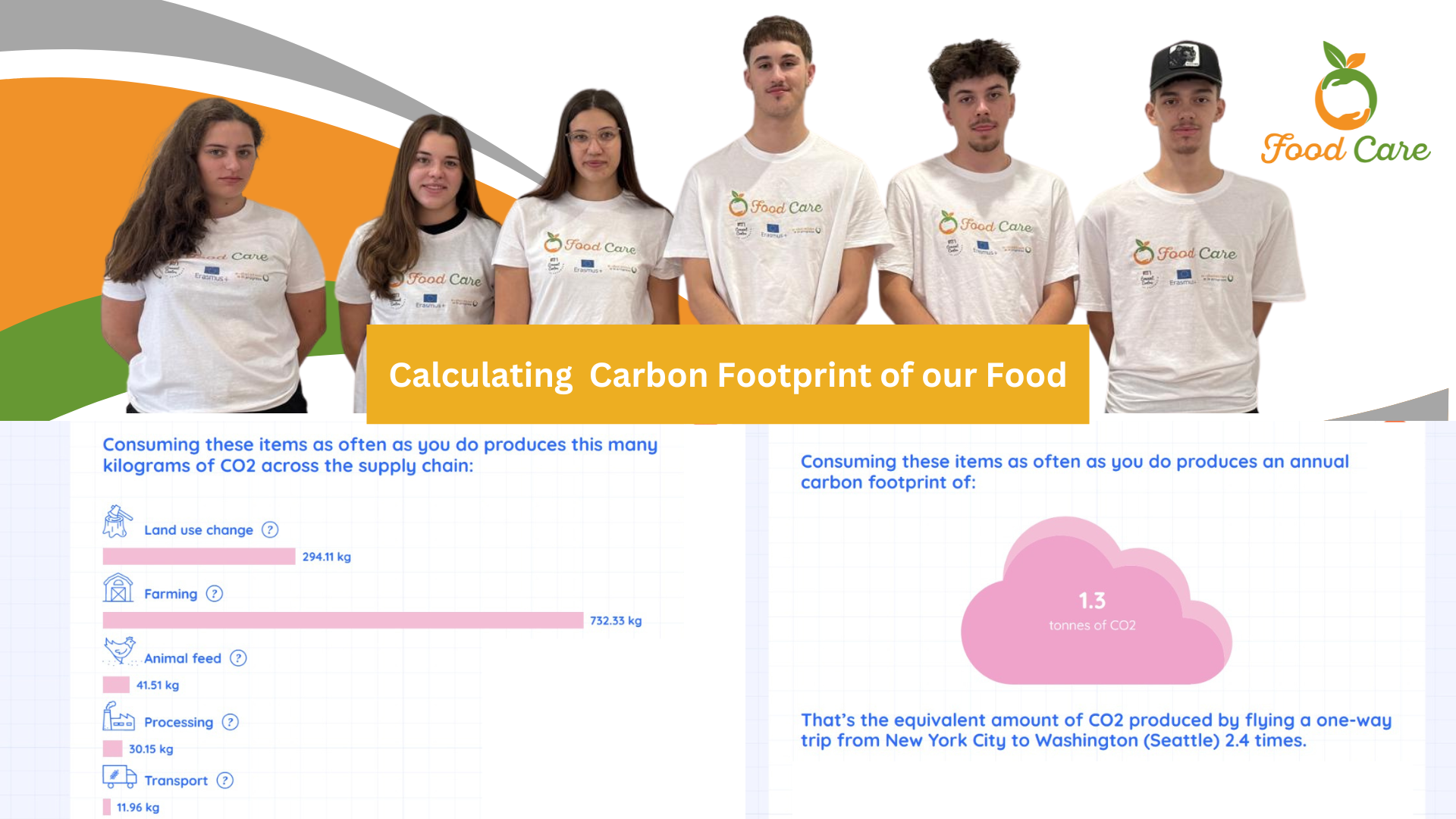
Our Slovenian Ambassadors took on a new challenge: exploring the environmental footprint of food using the BBC Food Calculator.
This interactive tool helped them understand how everyday meals impact the planet in terms of CO₂ emissions, land use, and water consumption.For many of the Ambassadors, it was the first time they had seen food presented in this way. While they are used to thinking about recipes, flavors, and traditions, the calculator revealed a different perspective—one that connects food choices directly with climate change and sustainability.
The results brought out a mix of surprise and reflection. Some of the group were shocked at how high the footprint of common foods like cheese and meat can be, while others noticed how much lower the numbers are for fruits, vegetables, and grains. A few admitted they had never thought about water use in food production before, and the tool made them realize that every meal is more than just taste—it’s also about resources.
What they all agreed on is that small changes can make a big difference. Even swapping one ingredient for another, or choosing local and plant-based foods more often, can reduce the environmental impact of a meal. This discovery felt empowering: instead of seeing sustainability as something abstract or far away, the ambassadors could see clearly how their personal food choices matter.
Through this activity, the Slovenian FoodCare ambassadors connected tradition with awareness. They recognized that it’s possible to honor cultural dishes while also being mindful of the planet. For them, the CO₂ calculator wasn’t just an online tool—it was a reminder that the future of food is in their hands.
Tine
👉 “I didn’t realize how much CO₂ is connected to something simple like cheese or meat. It makes me think more about what I eat every day. Pretty cool to see the numbers in real life.”
Nik
👉 “For me it was surprising how big the difference is between foods. Like, one choice really can change the footprint a lot. It makes me want to try more veggie options.”
Nuša
👉 “I liked seeing the water use part. I never thought about food that way before. It shows that even small swaps can matter for the planet.”
Laura
👉 “It’s kind of shocking when you see the footprint of something you eat all the time. It makes me think that traditions are great, but we also need balance with the environment.”
Edonit
👉 “The calculator was interesting because it shows impact super quickly. I think young people should check it out, because we are the ones who can change habits first.”
Emily
👉 “I thought it was fun to test different foods. Some things I expected, others totally surprised me. It’s a good reminder that eating smart can be tasty and better for the climate too.”